The Handmade Logo That Paid Off Years Later

At first glance, the repurposed British colonial architecture and lush greenery of Singapore’s Dempsey Hill feel more like a retreat than a place for a creative working to exist. Yet this is exactly where KENNEL chose to be. And it knows exactly why. A co-working space for makers, writers, thinkers, and creative founders — those in the incubation phase of an idea.
When the creative brief arrived, the why was clear. KENNEL was seeking something authentic, tactile, and hand-printed — an analog statement for the identity.
My instinct turned immediately to printmaking. I majored in Printmaking in art school— silkscreening t-shirts on Friday nights, selling them at flea markets on weekends to fund my art supplies. It was my first encounter with creative entrepreneurship; it was tiring, and was also rewarding.
For the KENNEL identity, returning to silkscreen felt right.
A process where ink bleeds slightly at the edges. Where two layers don’t quite align. Where every print carries the evidence of the artist’s hands. Those small imperfections are what make the work authentic.
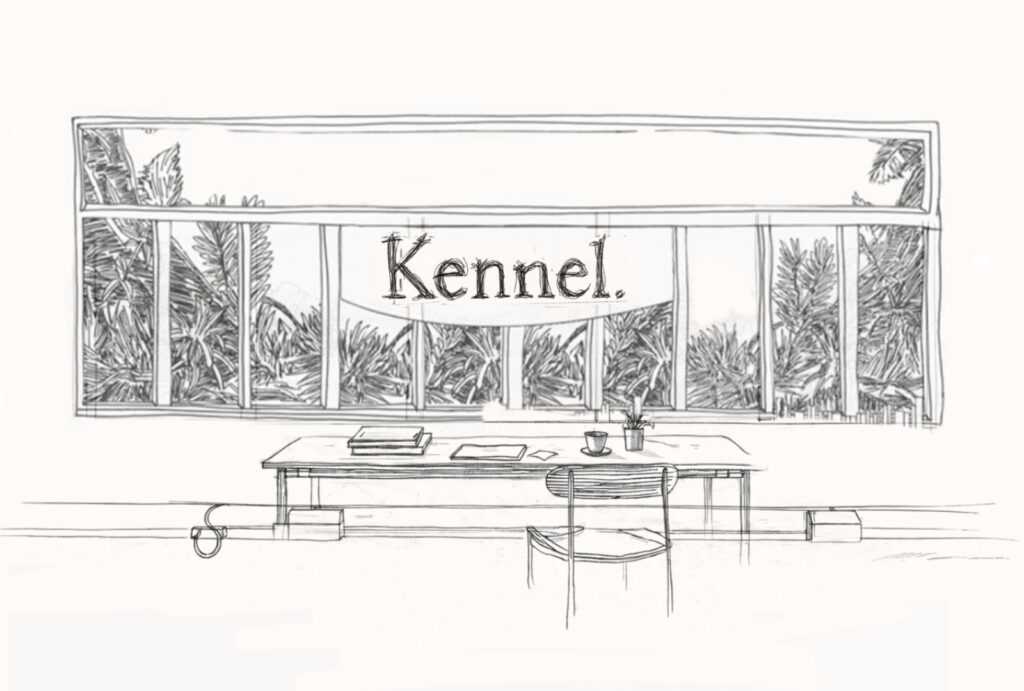
The website carried the same language — hand-drawn sketches of Dempsey’s lush greenery. Simple, gestural black and white line drawings that made you curious enough to want to visit KENNEL. The business cards printed with rubber stamps and left intentionally unfinished on the reverse. A blank space for handwritten notes. More than a name card, a physical record of a new connection. One that stays on your desk a little longer.
Fast forward a few years.
While presenting my portfolio for an Art Director role, the Creative Director stopped mid-scroll. “I recognise that,” she said. She had been a Kennelist. She remembered the name card. The website. The way the space felt. That moment of recognition became a conversation. That conversation, in turn, became an offer.
It was the memory that made the place special. And the connection.
Every touchpoint of KENNEL hand-made, artistic approach.
Most brand investment chases attention — impressions, reach, recall. KENNEL had aimed for something harder and more durable: the feeling of having been somewhere real. Across a room, years later, it held.
Authenticity isn’t a tone of voice. It’s a series of small decisions that accumulate into something a stranger can recognise, years later, across a room.
Somewhere in Singapore, Dempsey Hill still sits under its rain trees. The name cards are still out there — in drawers, in portfolios, in the memory of people who were, for a time, Kennelists.
That’s not nostalgia. That’s brand equity in its most honest form.
The question worth sitting with, for anyone building something today — what will yours feel like in someone’s hands, years from now?